
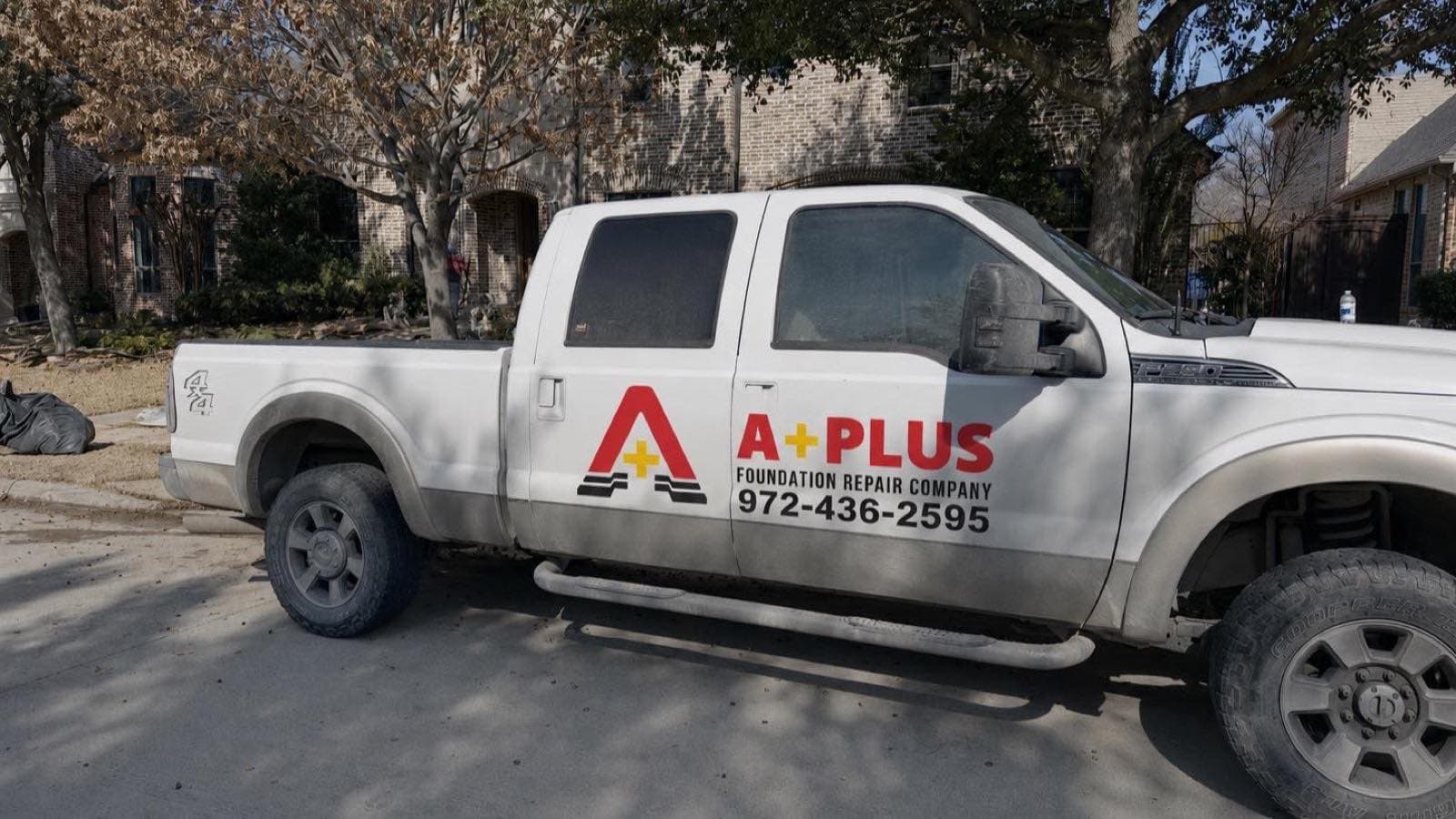
Plano is a case study in what happens when a city builds out fast on the most reactive soil in Texas and then lets the landscaping mature. The homes went up through the 1980s and 1990s, the trees planted with them are now forty years old, and those two facts together explain most of the foundation work we do here.
Why foundations move in Plano
Plano sits squarely on the Blackland Prairie. The clay beneath it is deep and highly plastic, meaning there is a great volume of material available to change size as moisture changes. Between a wet spring and a drought summer the ground under a Plano home can move several inches vertically, and it does not move uniformly — the perimeter dries first and drops first while the center, insulated by the slab itself, stays put.
The homes we work on in Plano
The typical Plano foundation is a 1980s to 2000s slab-on-grade, generally built to a decent standard for its era. These are not badly built homes. They are well-built homes sitting on soil that moves more than the slab can accommodate, which is a different problem and needs a different answer than patching.
Water, terrain, and drainage
Plano's mature tree canopy is the complicating factor. A large live oak or elm can draw hundreds of gallons a day out of the soil in summer, and when it is planted fifteen feet from the house, it is drawing that water out from under the foundation. A great deal of Plano settlement is localized to one corner, and when elevations are mapped the low point is often on the side with the largest tree.
What Plano homeowners notice through the year
In Plano the calendar to watch is the drought calendar. A dry June through September pulls the perimeter down while the slab center stays supported, and the first sign is usually a diagonal crack above an interior door on the side of the house closest to a large tree. Homeowners who run consistent foundation watering through those months see markedly less movement than neighbours who let the soil go from bone dry to saturated overnight.
What our crews see in Plano
Plano homeowners often ask whether they should remove the tree. Usually the answer is no. A root barrier installed between the tree and the foundation redirects growth downward and solves the mechanism without costing you forty years of shade and a significant amount of property value.
Permits and inspections in Plano
Collin County municipalities generally require a permit for structural foundation repair, and an engineer's report is commonly part of the package on larger scopes. We confirm what Plano requires for your specific job and file it as part of the work.
Independent sources: soil classifications for Collin County can be looked up through the USDA Web Soil Survey, and Texas A&M AgriLife Extension publishes guidance on managing expansive soils around Texas foundations.
Areas of Plano we serve
We serve all of Plano, from the older east-side neighborhoods near downtown out through the Legacy and Willow Bend corridors.
- West Plano
- Legacy West
- Willow Bend
- Old Town Plano
- Los Rios
- Deerfield
- Preston Meadow
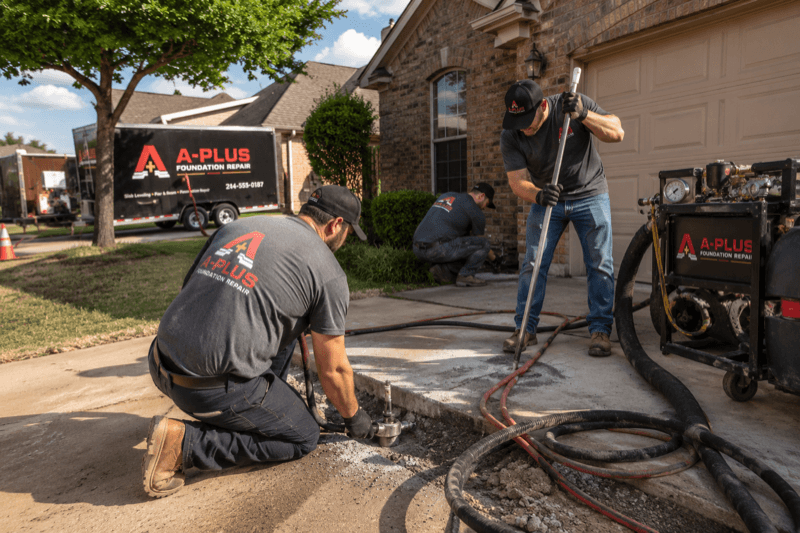
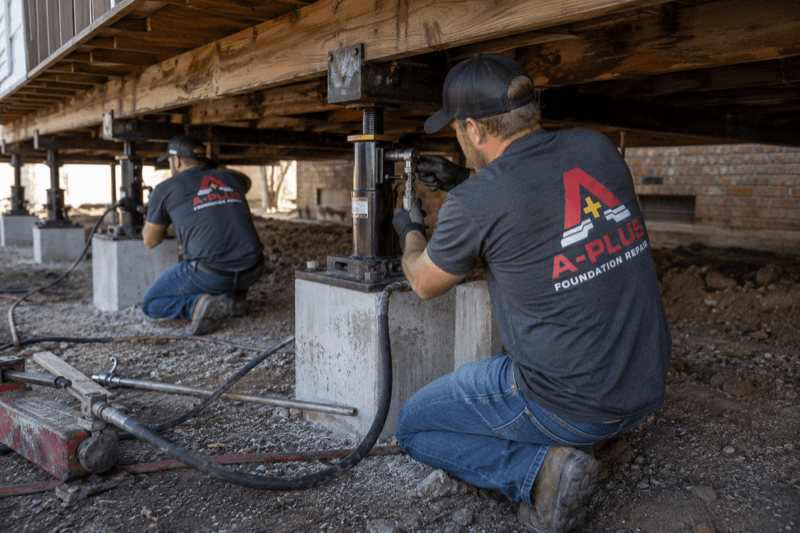
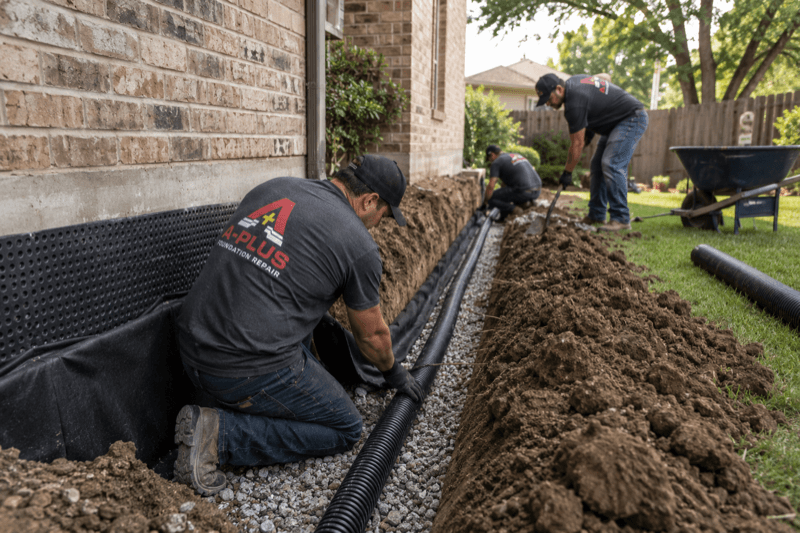
Our services in Plano
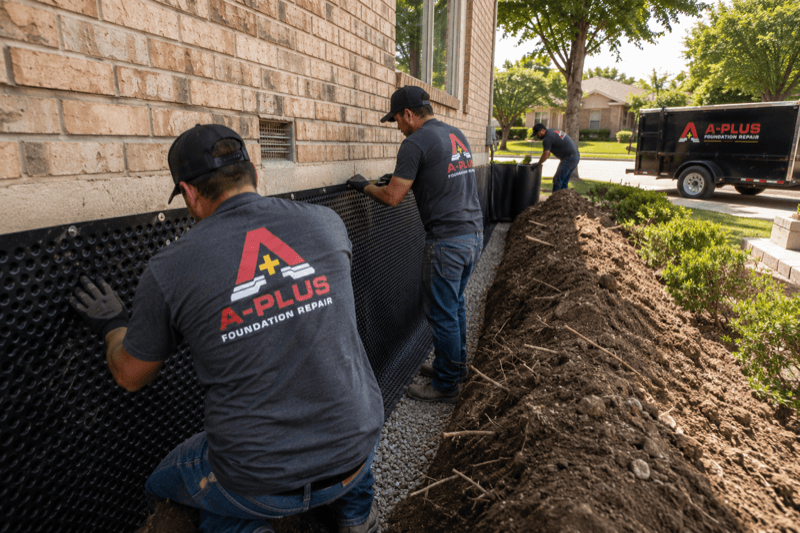
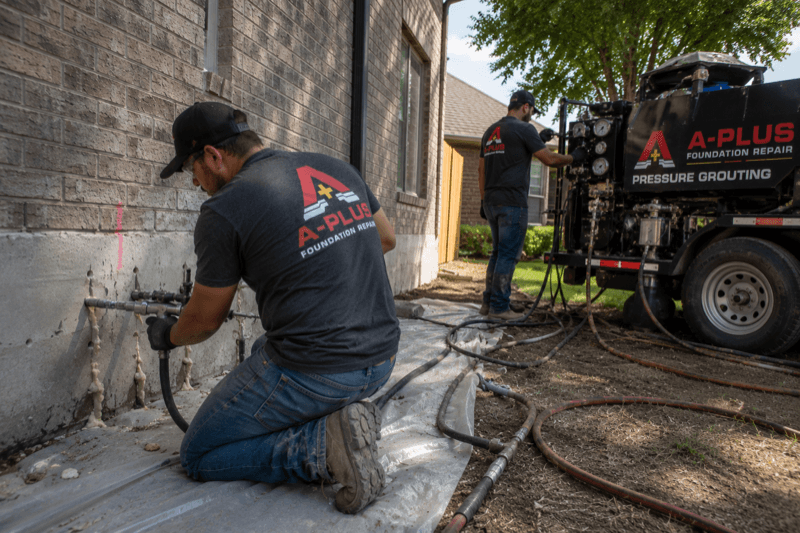
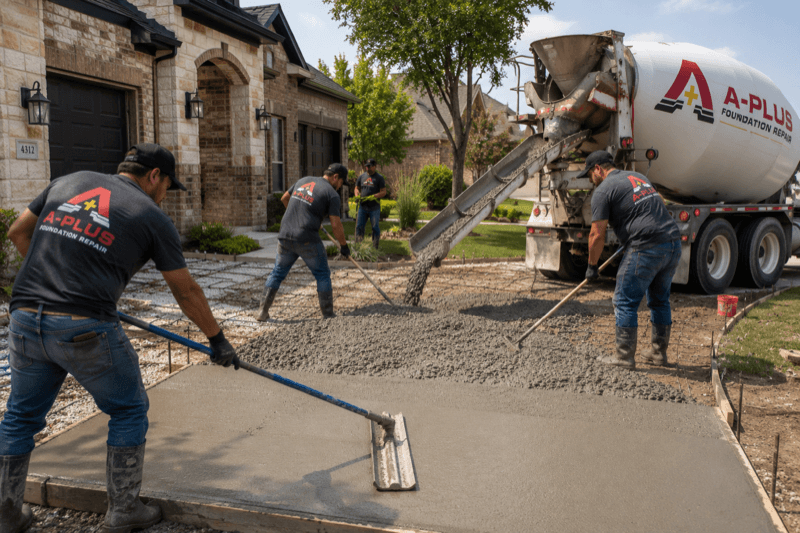
Foundation Repair in Plano: Common Questions
Answers specific to Plano and the surrounding Collin County area, covering local soil, permitting, cost, and timelines.
Why do foundations fail in Plano?
Plano sits squarely on the Blackland Prairie, whose highly plastic clay can change volume dramatically between a wet spring and a drought summer. That seasonal shrink-swell cycle is the single largest cause of foundation damage in Plano, and it acts hardest around the perimeter of a slab, where soil dries fastest and rewets fastest. Tree roots, poor lot drainage, and under-slab plumbing leaks all accelerate it.
How do I know if my Plano home has a foundation problem?
Look for diagonal drywall cracks running from the corners of doors and windows, doors that stick or will not latch, stair-step cracks in exterior brick mortar, gaps opening where trim meets brick, and floors that feel sloped or bouncy. One sign alone may have another explanation. Two or more together in a Plano home usually means the deep Blackland Prairie clay beneath it is moving and the foundation should be measured.
How much does foundation repair cost in Plano?
There is no honest flat answer, because cost depends on how many piers your home needs and how deep they have to go to reach stable soil. A localized repair on one corner costs a fraction of stabilizing a full side of a house. We take elevation readings across your floor first and then give you a written pier count and price. Free evaluations for Plano homeowners, no obligation.
Do I need a permit for foundation repair in Plano?
Most municipalities in and around Collin County require a permit for structural foundation repair, and some require an engineer's report before issuing one. We handle permitting as part of the job and pull whatever Plano requires, so you are not left navigating the city process yourself.
How long does foundation repair take in Plano?
Most residential repairs in Plano are completed in one to three working days. Larger homes, or projects that combine piering with drainage correction, can take longer. You can normally stay in the house while we work, and we tell you in advance which days involve heavy equipment.
What kinds of homes do you repair in Plano?
Plano is largely 1980s through 2000s slab-on-grade, built as the city expanded north, and the mature landscaping planted with those homes now competes directly with foundations for soil moisture. We work on both slab-on-grade and pier-and-beam foundations, and the right method depends on what your home actually sits on, not on which service we would prefer to sell.
When is the best time of year to repair a foundation in Plano?
We work in Plano year-round and no season makes the repair less effective. Late summer and early fall, when the deep Blackland Prairie clay is at its driest and most contracted, often show the truest picture of how far a home has settled. Waiting for a particular season while cracks widen generally costs more than it saves.
Do you offer free estimates in Plano?
Yes. Evaluations for Plano homeowners are free and carry no obligation. A technician measures elevations throughout the home, inspects the exterior and any accessible crawl space, and explains what the numbers mean in plain language. You receive a written scope and price. Call (972) 436-2595 to schedule.
Is your work in Plano warrantied?
Yes. Our foundation leveling work carries a Lifetime Transferable Warranty. If an area we stabilized settles again we return and adjust it at no charge, and because the warranty transfers with the property, it protects resale value when you sell your Plano home.
Do you serve all of Collin County?
Yes, we serve Plano and the surrounding Collin County area, along with the wider Dallas/Fort Worth metroplex. If you are unsure whether your address falls inside our service area, call (972) 436-2595 and we will tell you straight away.
We also work near Plano
Planois one of many North Texas communities we serve. If you are just outside the city limits we very likely still cover you — call (972) 436-2595 and ask.
Texas Weather Changes Fast. Don't Wait.
Foundation damage doesn't fix itself—it only gets more expensive. Protect your home's value before the next heavy rain cycle shifts your soil. Get a completely free, no-pressure structural evaluation today.